01
Umugina
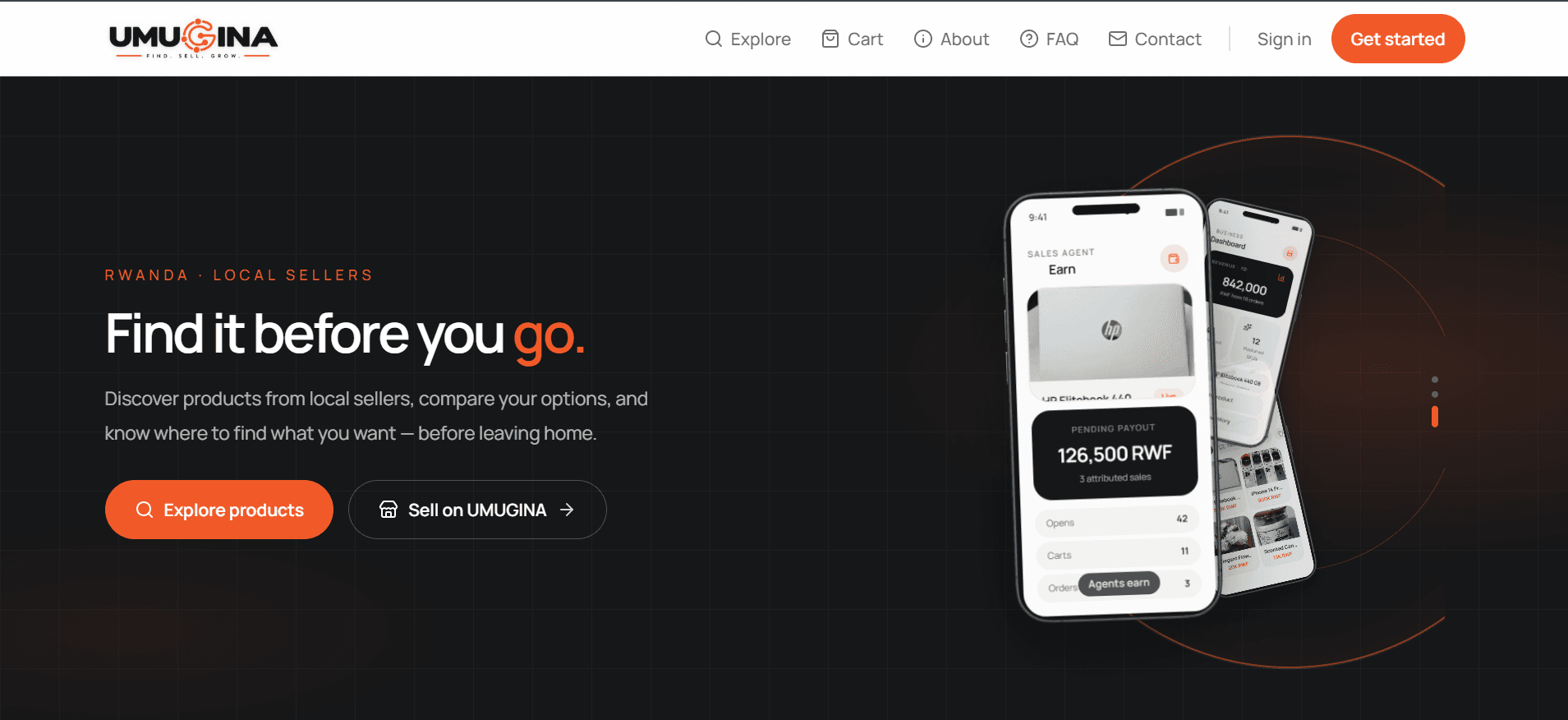
A Rwanda marketplace where shoppers see what local sellers stock, at what price, and where — before they leave home. Businesses list catalogs; agents earn on attributed sales.
2026productshipped

Case study
Property software for landlords and agencies in Rwanda: rent, leases, expenses, and maintenance in one place — with a public listings site to fill vacant units.
Role: Product design and engineering
Umutungo
01
Ops workspace
02
Units & leases
03
Public listings
04
Prospects
Owners run the portfolio privately; vacant units can go on a public listings site.
Landlords, property managers, agents, and agencies running rental portfolios in Rwanda and East Africa, priced and reported in RWF.
Umutungo is two products under one account. Owners run the portfolio in a private ops workspace — units, leases, rent, costs, maintenance, and month-end reports. Separately, vacant inventory can be published to listings.umutungo.co so renters and buyers can browse without seeing internal ledgers.
Most portfolios still live in notebooks, WhatsApp threads, and spreadsheets. Rent status is unclear, vacancies sit longer than they should, and closing the month means reconstructing the truth from chats and files.
RURANGO contribution: Product design and engineering.
Treat operations and listings as related but separate hosts. The workspace is the system of record. Listings only show what the owner chooses to publish. When a unit is occupied, it can stop appearing publicly; when it is vacant again, it can go back up.
Seekers browse published rentals, sales, land, and commercial stock. Owners keep ledgers, expense history, and maintenance private. Same account, different trust boundary.
Landlord, agent, and agency plans set unit counts, managers, and listing caps up front — so growth limits are visible before month-end surprises.
Income, costs, and occupancy roll into a period report per property instead of being rebuilt from chats and spreadsheets.
The live product includes a free trial, portfolio dashboard, property and unit setup, expense and maintenance tracking, tenant payment claims and repair reports, and a publish/prospect flow for vacant units on the listings site.
Limited to what is publicly verifiable — no invented metrics.
Related work
01
A Rwanda marketplace where shoppers see what local sellers stock, at what price, and where — before they leave home. Businesses list catalogs; agents earn on attributed sales.
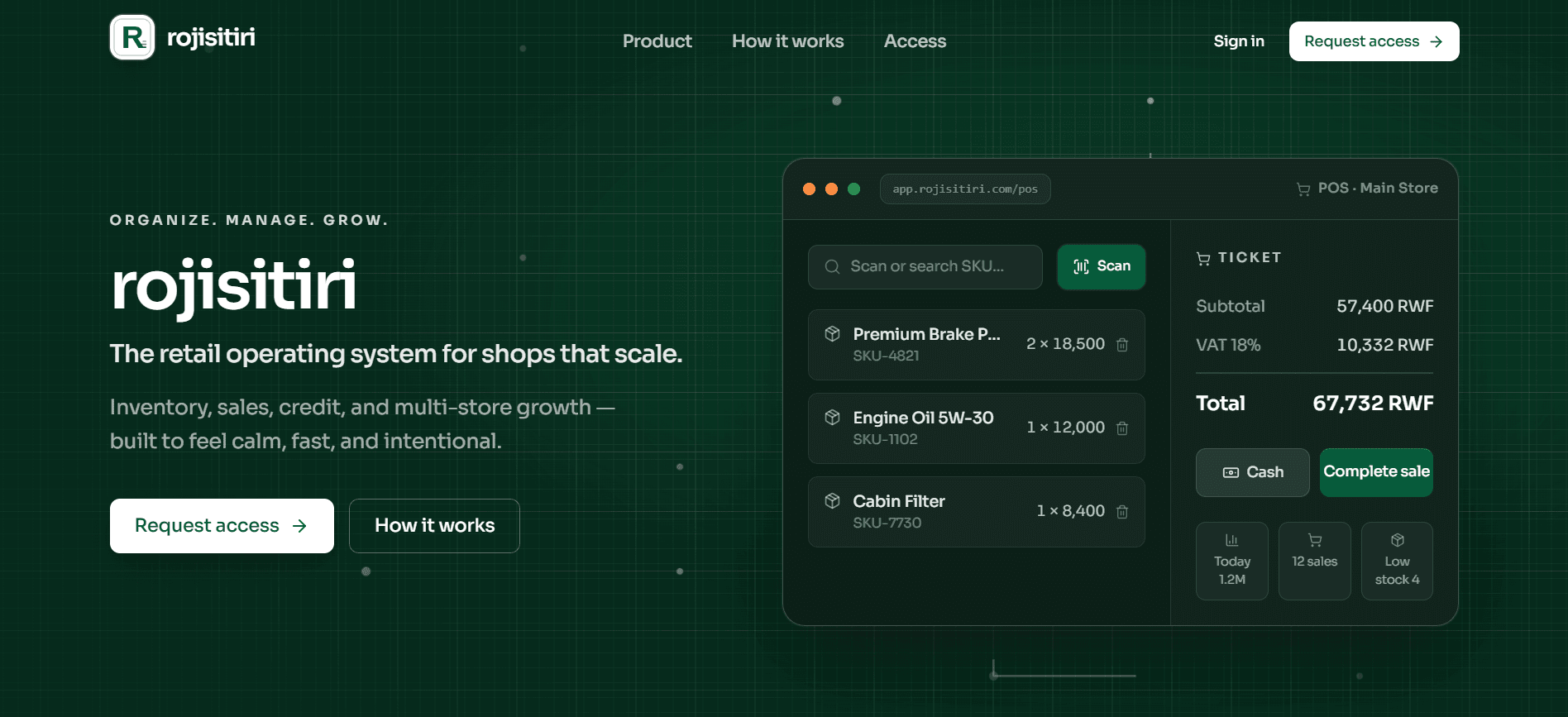
Retail software for shops that grow beyond one till: point of sale, inventory, customer credit, and reporting across stores — currently in soft launch.
Next step
If you have a product to build, improve, or launch — get in touch.